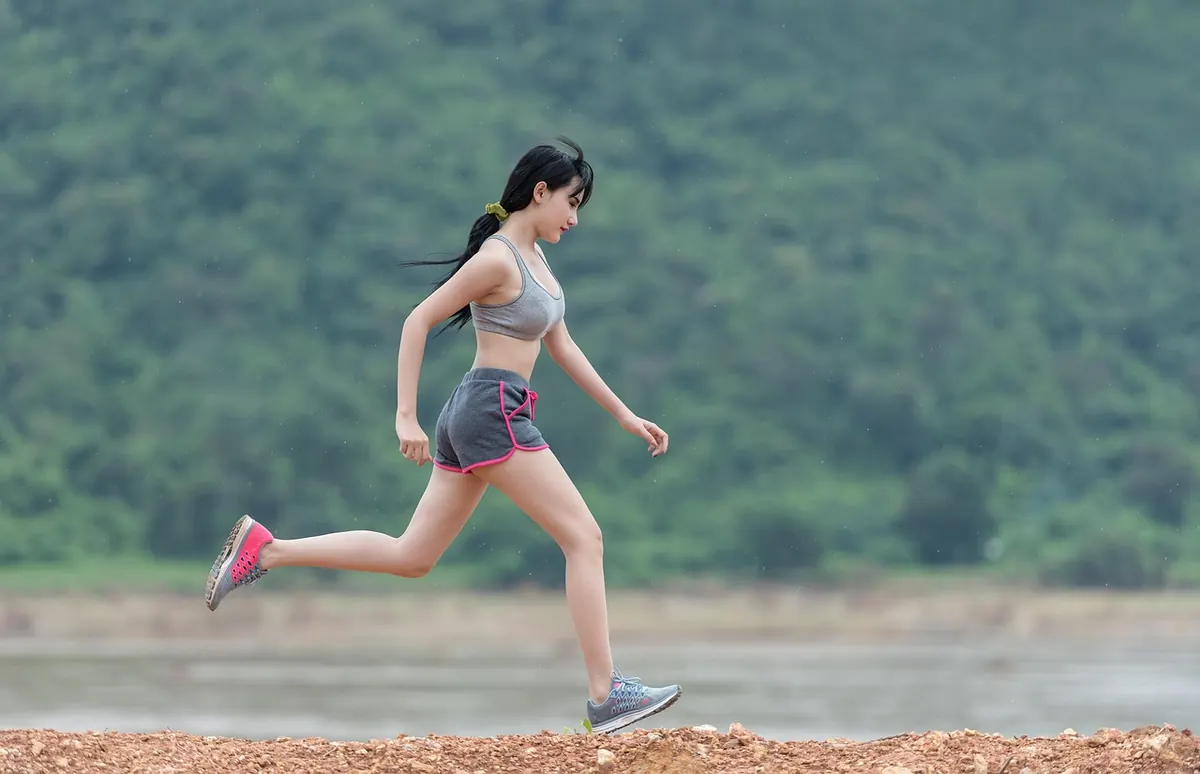
By nine in the morning the sidewalk is already radiating warmth, and the run that felt effortless in April now feels like pushing through wet wool. Summer doesn't cancel fitness, but it does rewrite the terms. Your body diverts more blood to the skin to cool itself, leaving less for working muscles. Heart rate drifts upward at a pace that used to feel easy. Sweat quietly drains fluid and electrolytes. Fighting all of that only makes you miserable. Working with it keeps you moving.
The adjustments below are small — a shift in timing, a change in what you drink, a willingness to head indoors when the heat index spikes — but together they're the difference between a summer of steady training and a summer spent recovering on the couch.
Hydration Starts Hours Before You Sweat
Most people drink when they're already thirsty, which is a little late. Thirst arrives after fluid loss has begun, and in heat your body is losing water through sweat even when you're standing still.
Begin the day with a full glass of water. A quick check in the bathroom tells you a lot: pale straw-colored urine suggests you're on track, while dark amber means you're playing catch-up. Two hours before a workout, drink 16 to 20 ounces. During the session, take a few gulps every 15 to 20 minutes rather than chugging a bottle at the end.
For sessions longer than about an hour, or if you sweat heavily and notice salt stains on your clothes, add electrolytes. Sodium is the mineral you lose in the greatest quantity, so a sports drink, an electrolyte tablet, or water with a pinch of salt and a squeeze of citrus all work. Plain water alone over a long, hot session can dilute your sodium levels, which is its own problem — steady sipping beats heroic volumes. Alcohol the night before makes dehydration worse, and a large iced coffee is not a hydration plan.
Timing Beats Willpower
You cannot out-discipline a 100-degree afternoon. Set the schedule around the weather instead, and treat that as strategy rather than surrender.
- Go early or go late. Before 9 a.m. and after 7 p.m. are usually the coolest windows. Morning has the edge: pavement and air haven't stored the day's heat yet.
- Check the heat index, not just the temperature. Humidity is what turns a warm day dangerous, because sweat can't evaporate to cool you.
- Pick shaded routes. Tree-lined streets, park trails, and canal paths can run several degrees cooler than open asphalt. Loop back near water fountains if you can.
- Schedule your hardest session on the coolest day of the week. Long runs and heavy intervals don't belong on the hottest afternoon.
Give your body two weeks to adjust
Heat acclimatization is real and takes roughly 10 to 14 days. Start with sessions at 50 to 70 percent of your usual duration, then add a little every few days. You'll sweat earlier, sweat more dilute, and feel less wrecked at the same effort. Skip this ramp and you'll spend the first hot week wondering why your legs feel like sandbags.
Change the Format, Keep the Training
Your fitness goal doesn't need to change; the container it comes in can. A 45-minute continuous run becomes a 25-minute run with walk breaks. A long ride becomes a shorter ride with more climbing in the shade. Intervals work well in heat because they build in recovery: push for two minutes, ease off for two, repeat.
Strength training tolerates heat better than endurance work, so shifting more volume to resistance sessions in July is a reasonable trade. Cooling yourself before you start helps too — a cool shower, a cold drink, or a wet towel around your neck lowers your starting temperature and buys you comfortable minutes.
If you're debating whether it's too hot for a personal best, it's too hot for a personal best. Train for consistency in summer and chase times in October.
Indoor Alternatives That Actually Count
Some days the responsible choice is a closed door and a fan. None of these are a step down in training quality:
- Treadmill, bike trainer, or rowing machine with a fan pointed at you and a bottle within reach.
- The pool. Lap swimming is full-body conditioning with built-in cooling. Water walking or aqua aerobics works if you'd rather not swim laps.
- A bodyweight circuit at home. Squats, push-ups, lunges, planks, rows with a band — 40 seconds on, 20 seconds off, four rounds.
- Stairs or a shopping-center walk if you need air conditioning and company.
- A group class or gym session during the worst hours of the afternoon.
Know When to Stop
Heat illness escalates quickly, and the early signals are easy to dismiss as ordinary fatigue. Watch for heavy sweating with cold, clammy skin, headache, dizziness, nausea, muscle cramps, or a pounding heartbeat. If any of those show up, stop, move into shade or air conditioning, loosen clothing, drink something with electrolytes, and cool your skin with wet cloths.
Heat stroke is a medical emergency. Warning signs include hot skin, confusion, slurred speech, vomiting, or loss of consciousness. Call emergency services and start cooling the person with cold water or ice while you wait; do not leave them alone. If you have a heart, lung, or kidney condition, take medication that affects sweating or blood pressure, or are pregnant, talk with a clinician before training in serious heat.
A Summer Routine You'll Actually Keep
Build the week around two or three anchor sessions you'll do early, and keep one flexible indoor backup for the days the forecast turns brutal. Lay out light, loose, moisture-wicking clothes the night before so the 6 a.m. version of you has fewer excuses. Freeze a bottle half-full so it stays cold through the workout.
Then let the pace be what it is. Slower splits in July aren't lost fitness; they're the price of showing up, and they pay off in September when everyone else is rebuilding from three weeks off. Adjust, hydrate, and keep moving.
Photo: sasint / Pixabay