Strength training has a reputation problem. It sounds like something that requires a rack of weights, a rubber floor, and someone yelling encouragement. It doesn't. Your body already supplies the resistance, and a handful of well-chosen movements done two or three times a week will build genuine strength in your legs, hips, back, and shoulders. The catch is that bodyweight training rewards good technique more than it rewards effort. Ten controlled minutes of squats, push-ups, and bridges done properly will do more for you than an hour of sloppy reps. What follows is six moves, a weekly schedule you can keep, and clear ways to make each movement harder as you improve.
Why Bodyweight Training Is Enough to Start
When you first begin, your limiting factor isn't the weight on the bar. It's your ability to control your own joints and coordinate a movement pattern. A bodyweight squat teaches your hips and knees to work together before you ever need to load them.
Bodyweight training also removes the two most common obstacles: cost and travel. There's no setup to dread, so a 20-minute session actually happens. And because you can't add plates, you learn to progress by changing leverage and tempo instead — which builds control that carries over to everything else.
It isn't the end of the road. At some point, most people add resistance to keep getting stronger. But for the first few months, your own body is plenty.
The Six Moves That Cover Your Whole Body
You don't need 40 exercises. You need a squat, a push, a hinge, a pull, a single-leg movement, and something for your trunk. These six cover it.
- Chair squat. Stand in front of a chair, feet shoulder-width apart. Push your hips back as if sitting down, let your knees travel forward over your toes, and tap the seat lightly before standing. Keep your chest tall and your heels down. If your knees cave inward, think about spreading the floor with your feet.
- Incline push-up. Place your hands on a kitchen counter or a sturdy table, slightly wider than your shoulders. Keep a straight line from head to heels — no sagging hips, no piked butt. Lower until your chest nearly touches the surface, then press away. The higher the surface, the easier the movement.
- Glute bridge. Lie on your back, knees bent, feet flat and hip-width apart. Press through your heels and lift your hips until your body forms a straight line from knees to shoulders. Squeeze your glutes at the top for a full second. If you feel this in your lower back instead of your glutes, you're arching rather than hinging — tuck your ribs down.
- Reverse lunge. From standing, step one foot back and lower until both knees bend to about 90 degrees. Keep your front shin roughly vertical. Step forward to return. Hold a wall or chair for balance if you need to; that's not cheating, it's practice.
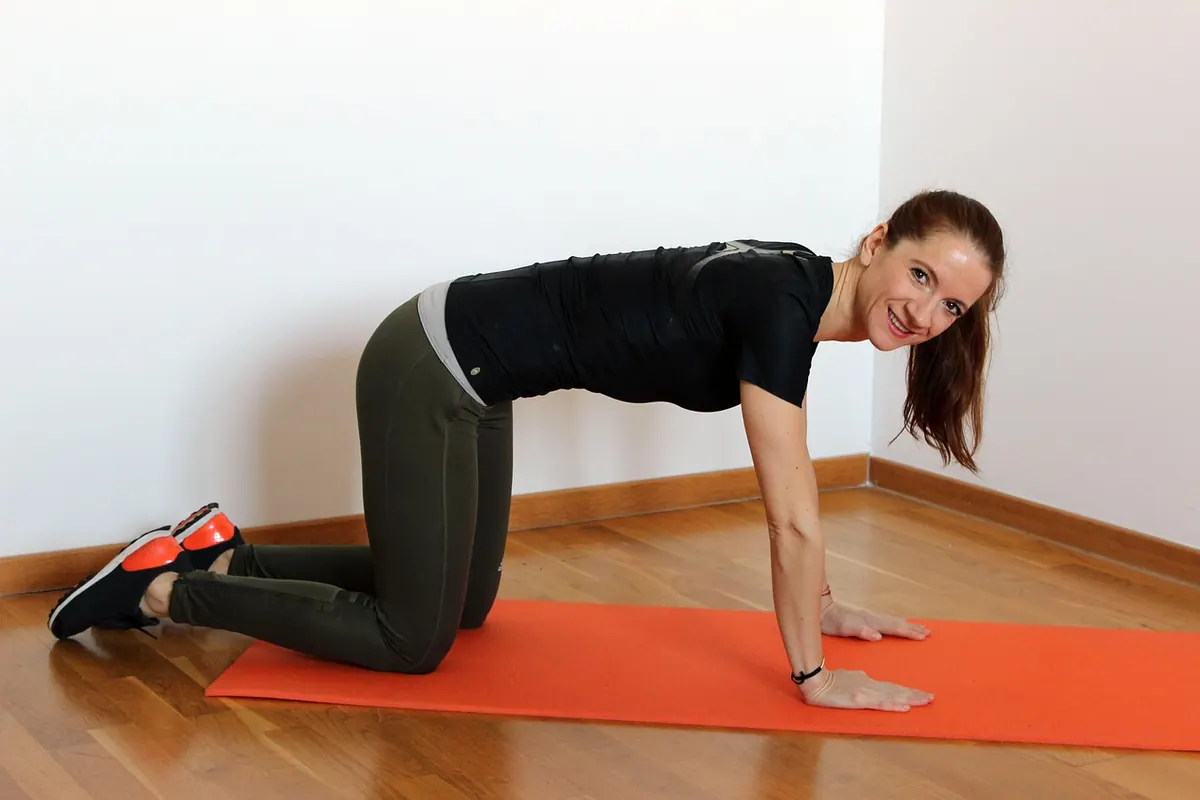
- Bird dog. On hands and knees, extend one arm forward and the opposite leg back until both are level with your torso. Keep your hips square to the floor. Pause, then return. Slow beats big here.
- Forearm plank. Elbows under shoulders, forearms on the floor, body in one line. Squeeze your glutes and brace your belly as if you're about to be poked in the stomach. Stop the moment your hips drop.
Three Form Habits Worth Building Now
Brace before you move
Take a breath in, then exhale gently while keeping your ribs down and your midsection firm. That braced position protects your spine during every squat, lunge, and push-up.
Slow the lowering phase
Count two seconds on the way down and one on the way up. Most beginners rush the descent, which is where control is built. If you can't lower slowly, the variation is too hard.
Stop two reps before failure
You should finish a set feeling like you had two or three clean reps left. Training to complete exhaustion on every set makes the next session harder and your form worse.
A Weekly Plan You Can Actually Keep
Two or three full-body sessions a week is enough. Give yourself at least one day between them.
- Monday — Full body A. Chair squats, incline push-ups, glute bridges, bird dogs. Three rounds.
- Tuesday — Easy movement. A 20- to 30-minute walk, or light stretching.
- Wednesday — Full body B. Reverse lunges, plank, glute bridges, incline push-ups. Three rounds.
- Thursday — Rest or walk.
- Friday — Full body A again. Same as Monday, aiming for one more rep per set.
- Saturday and Sunday — Rest. Do something enjoyable that involves moving.
Within each round, do 8 to 12 reps per exercise and hold the plank for 15 to 30 seconds. Rest 60 to 90 seconds between rounds. The whole session should take about 20 minutes. If that feels like too much at first, do two rounds instead of three. A shorter session you repeat beats a longer one you skip.
How to Progress Without Adding Weight
When all your sets feel comfortable, change one of these four things — not all of them at once.
- Add reps. Work from 8 up to 12 reps per set before making the movement harder.
- Change leverage. Move from an incline push-up to the floor, or from a chair squat to a full squat without the seat.
- Slow the tempo. Lower for three seconds instead of two, or pause for two seconds at the hardest point of the movement.
- Reduce rest. Trim your rest between rounds from 90 seconds to 60.
Write down what you did each session — reps, rounds, and which variation. It's easy to forget, and seeing last week's numbers is what tells you whether you're actually getting stronger.
Soreness, Rest, and When to Back Off
Mild muscle soreness for a day or two after training is normal, especially in the first couple of weeks. Sharp pain, joint pain, or pain that lingers past a few days is not — that's a signal to stop that movement and get it checked.
Sleep and food do most of the recovery work. Aim for consistent sleep, include protein with your meals, and drink water through the day. Take a full rest day between strength sessions; your muscles rebuild during the recovery, not during the set.
If you have a heart condition, an old injury, are pregnant, or are returning after a long break, check with a doctor or a qualified trainer before starting. This plan is general guidance, not personal medical advice.
Start Smaller Than You Think You Need To
For your first week, do two rounds per session with the easiest variation of each move. Ten easy reps of an incline push-up you can control is a better starting point than three shaky floor push-ups.
Add one rep per set the following week. By week four, most beginners are doing three rounds and have moved at least one exercise to a harder version. That's real progress, and it came from your own body, a patch of floor, and 20 minutes you decided to show up for.
Photo: alvoi / Pixabay